About the course
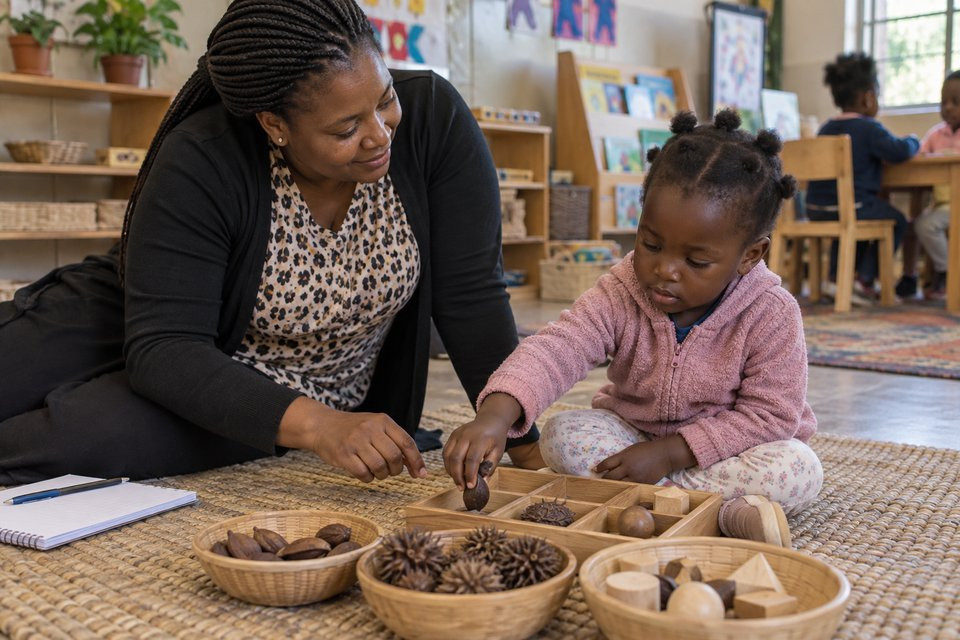
Study how young children learn through relationships, language, play and guided exploration. You will develop age-appropriate learning experiences for multilingual Southern African communities and evaluate your teaching through observation.
What you'll learn
- Explain development and learning in the early years.
- Plan inclusive activities with clear learning purposes.
- Use observation to assess progress sensitively.
- Integrate language, early mathematics and creative expression.
- Reflect on teaching evidence and child-protection responsibilities.
Requirements
- Entry requires relevant A Level subjects or a National Certificate in a related education or training field. English Language is required. Teaching-phase and supervised-placement rules apply. A relevant National Diploma may support second-year entry where BMIT approves module equivalence and professional rules permit. Advanced entry is not automatic.
- Programme-specific checks Have your existing qualifications and intended teaching phase assessed before enrolment. Confirm the approved initial or in-service teacher-education route, subject eligibility and supervised placement arrangements with BMIT.
- African Kalanga is a compulsory graduation subject in every year of this programme. BMIT confirms the approved entry route, any recognition of prior learning and access to required practical facilities before enrolment.
Course content
Subjects in this programme
The complete subject sequence below moves from foundations to specialist application. Stages show learning progression. Practical work and the final project draw together the subjects studied.
40 subjects are listed below, with a short description of each. The Subject descriptions tab contains the learning outcomes, topics, practical tasks and assessments.
Stage 1: Foundations
- Academic Literacy and Study Practice. Develop the reading, writing and evidence skills needed for study. You will examine reading strategies, argument structure, academic paragraphs. Write an evidence-based essay and document your revision decisions.
- Digital Business Skills. Use everyday digital tools to organise business information accurately. You will build reliable spreadsheets, manage documents and share work responsibly. Activities address uneven connectivity, accessible communication and the protection of personal information in small organisations and public offices.
- Business Communication. Prepare purposeful communication for colleagues, customers and decision makers. You will organise evidence, adjust tone for different audiences and check whether a message leads to the intended action. Examples include multilingual workplaces, professional correspondence and short management reports.
- Foundations of Education. Connect educational purposes with classroom practice and social context. You will examine educational aims, philosophy of education, historical change. Write a reasoned teaching philosophy using a school case.
- Sociology of Education. Examine how schools interact with inequality and social institutions. You will examine socialisation, school and family, class and inequality. Analyse a school-community case and propose a feasible response.
- Educational Psychology. Use learning and development theories to explain classroom observations. You will examine learning theories, motivation, cognition. Analyse an anonymised learning case without making a clinical diagnosis.
- Curriculum Studies. Translate curriculum intentions into a coherent learning sequence. You will examine curriculum aims, knowledge selection, progression. Map outcomes, content and assessment for a learning unit.
- Inclusive Education. Identify participation barriers and plan accessible learning support. You will examine learning barriers, universal design, differentiation. Adapt a lesson and assessment for a specified access need.
- Child Protection and Professional Conduct. Recognise learner-welfare concerns and follow appropriate procedures. You will examine professional boundaries, child protection, consent. Complete a safeguarding case analysis using approved institutional procedures.
- Education Law and Policy. Interpret policy and legal responsibilities in educational settings. You will examine school governance, learner rights, teacher duties. Review a school policy against supplied current legal documents.
Stage 2: Core subjects
- Child Development. Examine development across early and middle childhood in context. You will examine physical development, language development, social relationships. Prepare an observation framework and developmental support activity.
- Early Childhood Care, Nutrition and Safety. Plan routines supporting young children's care and participation. You will examine daily routines, nutrition, hygiene. Prepare a centre routine and care-environment checklist.
- Families and Early Childhood Communities. Build respectful relationships between learning settings and families. You will examine family diversity, home languages, communication. Develop a family engagement and school-transition plan.
- Play-Based Early Learning. Organise purposeful play around children's developmental needs. You will examine play environments, exploration, language in play. Create a play-based learning area and observation record.
- Emergent Literacy. Support reading and writing foundations through language-rich learning. You will examine oral storytelling, print awareness, listening. Create a story sequence using TjiKalanga or another home language alongside English.
- Early Mathematical Learning. Develop early mathematical ideas through everyday situations. You will examine counting, comparison, sorting. Prepare guided early-mathematics activities with observation prompts.
- Creative Arts Education. Develop expression and interpretation through artistic processes. You will examine visual art, music, drama. Prepare inclusive arts activities with assessment criteria.
- Physical Education and Learner Wellbeing. Plan inclusive movement and wellbeing activities for learners. You will examine movement skills, participation, games. Design a supervised activity session with inclusive participation options.
- Lesson Planning and Facilitation. Plan lessons with clear learner actions and evidence of learning. You will examine learning outcomes, prior knowledge, instruction sequence. Teach a short lesson and revise the plan from learner responses.
- Teaching Practice I: Observation and Assisted Teaching. Connect coursework with supervised observation and supported lessons. You will examine school induction, observation, lesson preparation. Complete supervised observation and assisted teaching with an authenticated portfolio.
Stage 3: Specialist subjects and application
- Inclusive Practice in Early Childhood. Develop early identification, accessible play and family support. Use the foundation principles in more demanding teaching cases and evaluate the resulting learner evidence.
- Observation and Assessment in Early Childhood. Develop play observation, learning records and developmental feedback. Use the foundation principles in more demanding teaching cases and evaluate the resulting learner evidence.
- Early Childhood Centre Management. Coordinate a centre's learning, staffing and administrative work. You will examine centre planning, staff roles, resources. Prepare a centre operating plan and improvement priorities.
- Educational Technology. Select digital tools according to learning purpose and access. You will examine learning platforms, digital resources, interaction. Build an accessible digital activity and test the learner flow.
- Educational Assessment. Design fair assessments and use results to guide teaching. You will examine assessment purpose, task design, marking criteria. Produce an assessment task, rubric and feedback plan.
- Classroom Management. Establish routines and relationships supporting learning and participation. You will examine classroom climate, routines, behaviour support. Prepare a classroom-management plan and respond to a simulated disruption.
- Multilingual Language Support. Develop home-language resources, additional-language development and inclusive dialogue. Use the foundation principles in more demanding teaching cases and evaluate the resulting learner evidence.
- Learner Guidance and Support. Plan educational guidance within appropriate professional boundaries. You will examine listening, learning needs, career guidance. Prepare an anonymised support plan with referral decisions.
- Quality Assurance in Education. Use evidence to improve programme quality and learner experience. You will examine quality criteria, self-evaluation, learner feedback. Complete a programme review and prioritised action plan.
- Teaching Practice II: Guided Classroom Teaching. Take greater responsibility for a supervised teaching sequence. You will examine unit planning, classroom teaching, assessment. Teach a short unit and analyse learner progress with a mentor.
Stage 4: Professional integration and research
- Advanced Literacy Teaching. Develop reading difficulties, extended writing and critical literacy. Use the foundation principles in more demanding teaching cases and evaluate the resulting learner evidence.
- Advanced Mathematics Teaching. Develop multi-step reasoning, misconceptions and mathematical discussion. Use the foundation principles in more demanding teaching cases and evaluate the resulting learner evidence.
- Educational Leadership. Evaluate leadership through teaching quality and institutional evidence. You will examine leadership approaches, school improvement, staff relationships. Prepare a school-improvement proposal from a defined case.
- Educational Finance and Resource Management. Plan educational resources against learning priorities. You will examine budgeting, procurement, staff allocation. Prepare a costed improvement budget with reporting measures.
- Classroom Action Research. Investigate a teaching problem through an ethical enquiry cycle. You will examine problem identification, evidence review, action planning. Conduct an approved classroom enquiry using anonymised evidence.
- Research Methods and Evidence Analysis. Plan an enquiry suited to a specific social or organisational question. You will compare qualitative and quantitative approaches, prepare ethical data collection and assess evidence quality. The module connects research questions to sampling, analysis and clear reporting of uncertainty and limitations.
- Teaching Practice III: Professional Integration. Integrate planning, teaching and assessment in an approved placement. You will examine independent planning, supervised delivery, learner support. Complete supervised teaching and defend a professional portfolio.
African History and Pan Africanism
- African History and Pan Africanism 101 (Level 1, compulsory core module): Study African history through oral, written and archaeological evidence. Examine the diversity of African societies, knowledge and exchange, then trace the emergence of Pan African ideas about identity, solidarity and self-determination.
- African History and Pan Africanism 201 (Level 2, compulsory core module): Examine colonial change, resistance and liberation across Africa, with attention to Zimbabwe and South Africa. Compare Pan African movements, organisations and debates, including contributions from women, workers and diaspora communities.
- African History and Pan Africanism 301 (Level 3, compulsory core module): Evaluate the legacy of Pan Africanism in continental and regional cooperation, culture and public life. Apply historical inquiry to a heritage, community or professional issue, recognising both achievements and contested interpretations.
Assessment and practical learning
- Child-observation and lesson-planning portfolios.
- Demonstrations of inclusive learning activities.
- Observed teaching and a reflective enquiry report.
Practical application
Complete proposed supervised early-years teaching in an approved setting. Plan, teach and review a sequence of activities. Obtain appropriate permissions for observation and protect children’s identities in assessment records.
African History and Pan Africanism practical learning
- African History and Pan Africanism 101: Create an annotated timeline or digital learning poster on a selected African society or historical development. Compare at least two credible sources and explain one connection with your field of study.
- African History and Pan Africanism 201: Develop a comparative case study of a liberation issue or Pan African debate relevant to Southern Africa. Use a historical document alongside a scholarly account and explain differences in purpose and interpretation.
- African History and Pan Africanism 301: Prepare a sourced heritage or civic-learning project connected with your field or a Southern African community. Explain its historical basis, audience, permission needs and limits. Obtain consent if you conduct interviews.
Subject descriptions
Each subject below includes its purpose, learning outcomes, main topics, practical task and assessment approach.
Academic Literacy and Study Practice
Stage 1: Foundations
Develop the reading, writing and evidence skills needed for study. You will examine reading strategies, argument structure, academic paragraphs. Write an evidence-based essay and document your revision decisions.
Learning outcomes
- Explain reading strategies in a relevant case.
- Analyse the relationship between argument structure and academic paragraphs.
- Produce a reasoned response addressing referencing, information checking and study planning.
Main topics
- Reading strategies
- Argument structure
- Academic paragraphs
- Referencing
- Information checking
- Study planning
Practical task
Write an evidence-based essay and document your revision decisions.
Assessment
Submit the practical output with supporting evidence and an individual written or oral explanation. Assessment considers subject knowledge, accuracy, reasoning and the quality of the completed work.
Digital Business Skills
Stage 1: Foundations
Use everyday digital tools to organise business information accurately. You will build reliable spreadsheets, manage documents and share work responsibly. Activities address uneven connectivity, accessible communication and the protection of personal information in small organisations and public offices.
Learning outcomes
- Build a checked spreadsheet
- Organise retrievable business documents
- Apply appropriate access permissions
Main topics
- File organisation
- Word processing
- Spreadsheet formulas
- Presentations
- Collaborative working
- Privacy and access
Practical task
Create a shared office information pack with formulas, document versions and access instructions.
Assessment
Assessment combines applied exercises, a documented case or practical portfolio and an individual written or oral explanation. Judgement considers technical accuracy, reasoning, evidence quality and the feasibility of recommendations.
Business Communication
Stage 1: Foundations
Prepare purposeful communication for colleagues, customers and decision makers. You will organise evidence, adjust tone for different audiences and check whether a message leads to the intended action. Examples include multilingual workplaces, professional correspondence and short management reports.
Learning outcomes
- Write a concise business report
- Record decisions and assigned actions
- Present evidence for a defined audience
Main topics
- Audience and purpose
- Professional correspondence
- Report structure
- Meeting records
- Presentations
- Intercultural communication
Practical task
Produce a report, meeting record and five-minute briefing about a service problem.
Assessment
Assessment combines applied exercises, a documented case or practical portfolio and an individual written or oral explanation. Judgement considers technical accuracy, reasoning, evidence quality and the feasibility of recommendations.
Foundations of Education
Stage 1: Foundations
Connect educational purposes with classroom practice and social context. You will examine educational aims, philosophy of education, historical change. Write a reasoned teaching philosophy using a school case.
Learning outcomes
- Explain educational aims in a relevant case.
- Analyse the relationship between philosophy of education and historical change.
- Produce a reasoned response addressing school systems, professional identity and reflection.
Main topics
- Educational aims
- Philosophy of education
- Historical change
- School systems
- Professional identity
- Reflection
Practical task
Write a reasoned teaching philosophy using a school case.
Assessment
Submit the practical output with supporting evidence and an individual written or oral explanation. Assessment considers subject knowledge, accuracy, reasoning and the quality of the completed work.
Sociology of Education
Stage 1: Foundations
Examine how schools interact with inequality and social institutions. You will examine socialisation, school and family, class and inequality. Analyse a school-community case and propose a feasible response.
Learning outcomes
- Explain socialisation in a relevant case.
- Analyse the relationship between school and family and class and inequality.
- Produce a reasoned response addressing gender, language and social mobility.
Main topics
- Socialisation
- School and family
- Class and inequality
- Gender
- Language
- Social mobility
Practical task
Analyse a school-community case and propose a feasible response.
Assessment
Submit the practical output with supporting evidence and an individual written or oral explanation. Assessment considers subject knowledge, accuracy, reasoning and the quality of the completed work.
Educational Psychology
Stage 1: Foundations
Use learning and development theories to explain classroom observations. You will examine learning theories, motivation, cognition. Analyse an anonymised learning case without making a clinical diagnosis.
Learning outcomes
- Explain learning theories in a relevant case.
- Analyse the relationship between motivation and cognition.
- Produce a reasoned response addressing individual differences, emotional development and classroom applications.
Main topics
- Learning theories
- Motivation
- Cognition
- Individual differences
- Emotional development
- Classroom applications
Practical task
Analyse an anonymised learning case without making a clinical diagnosis.
Assessment
Submit the practical output with supporting evidence and an individual written or oral explanation. Assessment considers subject knowledge, accuracy, reasoning and the quality of the completed work.
Curriculum Studies
Stage 1: Foundations
Translate curriculum intentions into a coherent learning sequence. You will examine curriculum aims, knowledge selection, progression. Map outcomes, content and assessment for a learning unit.
Learning outcomes
- Explain curriculum aims in a relevant case.
- Analyse the relationship between knowledge selection and progression.
- Produce a reasoned response addressing integration, contextual adaptation and curriculum evaluation.
Main topics
- Curriculum aims
- Knowledge selection
- Progression
- Integration
- Contextual adaptation
- Curriculum evaluation
Practical task
Map outcomes, content and assessment for a learning unit.
Assessment
Submit the practical output with supporting evidence and an individual written or oral explanation. Assessment considers subject knowledge, accuracy, reasoning and the quality of the completed work.
Inclusive Education
Stage 1: Foundations
Identify participation barriers and plan accessible learning support. You will examine learning barriers, universal design, differentiation. Adapt a lesson and assessment for a specified access need.
Learning outcomes
- Explain learning barriers in a relevant case.
- Analyse the relationship between universal design and differentiation.
- Produce a reasoned response addressing assistive resources, referral and family collaboration.
Main topics
- Learning barriers
- Universal design
- Differentiation
- Assistive resources
- Referral
- Family collaboration
Practical task
Adapt a lesson and assessment for a specified access need.
Assessment
Submit the practical output with supporting evidence and an individual written or oral explanation. Assessment considers subject knowledge, accuracy, reasoning and the quality of the completed work.
Child Protection and Professional Conduct
Stage 1: Foundations
Recognise learner-welfare concerns and follow appropriate procedures. You will examine professional boundaries, child protection, consent. Complete a safeguarding case analysis using approved institutional procedures.
Learning outcomes
- Explain professional boundaries in a relevant case.
- Analyse the relationship between child protection and consent.
- Produce a reasoned response addressing confidentiality, reporting pathways and record keeping.
Main topics
- Professional boundaries
- Child protection
- Consent
- Confidentiality
- Reporting pathways
- Record keeping
Practical task
Complete a safeguarding case analysis using approved institutional procedures.
Assessment
Submit the practical output with supporting evidence and an individual written or oral explanation. Assessment considers subject knowledge, accuracy, reasoning and the quality of the completed work.
Education Law and Policy
Stage 1: Foundations
Interpret policy and legal responsibilities in educational settings. You will examine school governance, learner rights, teacher duties. Review a school policy against supplied current legal documents.
Learning outcomes
- Explain school governance in a relevant case.
- Analyse the relationship between learner rights and teacher duties.
- Produce a reasoned response addressing discipline, inclusion policy and accountability.
Main topics
- School governance
- Learner rights
- Teacher duties
- Discipline
- Inclusion policy
- Accountability
Practical task
Review a school policy against supplied current legal documents.
Assessment
Submit the practical output with supporting evidence and an individual written or oral explanation. Assessment considers subject knowledge, accuracy, reasoning and the quality of the completed work.
Child Development
Stage 2: Core subjects
Examine development across early and middle childhood in context. You will examine physical development, language development, social relationships. Prepare an observation framework and developmental support activity.
Learning outcomes
- Explain physical development in a relevant case.
- Analyse the relationship between language development and social relationships.
- Produce a reasoned response addressing emotional regulation, play and family context.
Main topics
- Physical development
- Language development
- Social relationships
- Emotional regulation
- Play
- Family context
Practical task
Prepare an observation framework and developmental support activity.
Assessment
Submit the practical output with supporting evidence and an individual written or oral explanation. Assessment considers subject knowledge, accuracy, reasoning and the quality of the completed work.
Early Childhood Care, Nutrition and Safety
Stage 2: Core subjects
Plan routines supporting young children's care and participation. You will examine daily routines, nutrition, hygiene. Prepare a centre routine and care-environment checklist.
Learning outcomes
- Explain daily routines in a relevant case.
- Analyse the relationship between nutrition and hygiene.
- Produce a reasoned response addressing safe environments, rest and caregiver communication.
Main topics
- Daily routines
- Nutrition
- Hygiene
- Safe environments
- Rest
- Caregiver communication
Practical task
Prepare a centre routine and care-environment checklist.
Assessment
Submit the practical output with supporting evidence and an individual written or oral explanation. Assessment considers subject knowledge, accuracy, reasoning and the quality of the completed work.
Families and Early Childhood Communities
Stage 2: Core subjects
Build respectful relationships between learning settings and families. You will examine family diversity, home languages, communication. Develop a family engagement and school-transition plan.
Learning outcomes
- Explain family diversity in a relevant case.
- Analyse the relationship between home languages and communication.
- Produce a reasoned response addressing participation, community resources and transition to school.
Main topics
- Family diversity
- Home languages
- Communication
- Participation
- Community resources
- Transition to school
Practical task
Develop a family engagement and school-transition plan.
Assessment
Submit the practical output with supporting evidence and an individual written or oral explanation. Assessment considers subject knowledge, accuracy, reasoning and the quality of the completed work.
Play-Based Early Learning
Stage 2: Core subjects
Organise purposeful play around children's developmental needs. You will examine play environments, exploration, language in play. Create a play-based learning area and observation record.
Learning outcomes
- Explain play environments in a relevant case.
- Analyse the relationship between exploration and language in play.
- Produce a reasoned response addressing early numeracy, social interaction and observation.
Main topics
- Play environments
- Exploration
- Language in play
- Early numeracy
- Social interaction
- Observation
Practical task
Create a play-based learning area and observation record.
Assessment
Submit the practical output with supporting evidence and an individual written or oral explanation. Assessment considers subject knowledge, accuracy, reasoning and the quality of the completed work.
Emergent Literacy
Stage 2: Core subjects
Support reading and writing foundations through language-rich learning. You will examine oral storytelling, print awareness, listening. Create a story sequence using TjiKalanga or another home language alongside English.
Learning outcomes
- Explain oral storytelling in a relevant case.
- Analyse the relationship between print awareness and listening.
- Produce a reasoned response addressing sound awareness, early writing and home literacy.
Main topics
- Oral storytelling
- Print awareness
- Listening
- Sound awareness
- Early writing
- Home literacy
Practical task
Create a story sequence using TjiKalanga or another home language alongside English.
Assessment
Submit the practical output with supporting evidence and an individual written or oral explanation. Assessment considers subject knowledge, accuracy, reasoning and the quality of the completed work.
Early Mathematical Learning
Stage 2: Core subjects
Develop early mathematical ideas through everyday situations. You will examine counting, comparison, sorting. Prepare guided early-mathematics activities with observation prompts.
Learning outcomes
- Explain counting in a relevant case.
- Analyse the relationship between comparison and sorting.
- Produce a reasoned response addressing pattern, shape and spatial language.
Main topics
- Counting
- Comparison
- Sorting
- Pattern
- Shape
- Spatial language
Practical task
Prepare guided early-mathematics activities with observation prompts.
Assessment
Submit the practical output with supporting evidence and an individual written or oral explanation. Assessment considers subject knowledge, accuracy, reasoning and the quality of the completed work.
Creative Arts Education
Stage 2: Core subjects
Develop expression and interpretation through artistic processes. You will examine visual art, music, drama. Prepare inclusive arts activities with assessment criteria.
Learning outcomes
- Explain visual art in a relevant case.
- Analyse the relationship between music and drama.
- Produce a reasoned response addressing movement, creative process and arts assessment.
Main topics
- Visual art
- Music
- Drama
- Movement
- Creative process
- Arts assessment
Practical task
Prepare inclusive arts activities with assessment criteria.
Assessment
Submit the practical output with supporting evidence and an individual written or oral explanation. Assessment considers subject knowledge, accuracy, reasoning and the quality of the completed work.
Physical Education and Learner Wellbeing
Stage 2: Core subjects
Plan inclusive movement and wellbeing activities for learners. You will examine movement skills, participation, games. Design a supervised activity session with inclusive participation options.
Learning outcomes
- Explain movement skills in a relevant case.
- Analyse the relationship between participation and games.
- Produce a reasoned response addressing physical safety, health habits and adaptation.
Main topics
- Movement skills
- Participation
- Games
- Physical safety
- Health habits
- Adaptation
Practical task
Design a supervised activity session with inclusive participation options.
Assessment
Submit the practical output with supporting evidence and an individual written or oral explanation. Assessment considers subject knowledge, accuracy, reasoning and the quality of the completed work.
Lesson Planning and Facilitation
Stage 2: Core subjects
Plan lessons with clear learner actions and evidence of learning. You will examine learning outcomes, prior knowledge, instruction sequence. Teach a short lesson and revise the plan from learner responses.
Learning outcomes
- Explain learning outcomes in a relevant case.
- Analyse the relationship between prior knowledge and instruction sequence.
- Produce a reasoned response addressing learning activities, questioning and closure.
Main topics
- Learning outcomes
- Prior knowledge
- Instruction sequence
- Learning activities
- Questioning
- Closure
Practical task
Teach a short lesson and revise the plan from learner responses.
Assessment
Submit the practical output with supporting evidence and an individual written or oral explanation. Assessment considers subject knowledge, accuracy, reasoning and the quality of the completed work.
Teaching Practice I: Observation and Assisted Teaching
Stage 2: Core subjects
Connect coursework with supervised observation and supported lessons. You will examine school induction, observation, lesson preparation. Complete supervised observation and assisted teaching with an authenticated portfolio.
Learning outcomes
- Explain school induction in a relevant case.
- Analyse the relationship between observation and lesson preparation.
- Produce a reasoned response addressing assisted teaching, mentor feedback and reflection.
Main topics
- School induction
- Observation
- Lesson preparation
- Assisted teaching
- Mentor feedback
- Reflection
Practical task
Complete supervised observation and assisted teaching with an authenticated portfolio.
Assessment
Submit the practical output with supporting evidence and an individual written or oral explanation. Assessment considers subject knowledge, accuracy, reasoning and the quality of the completed work.
Inclusive Practice in Early Childhood
Stage 3: Specialist subjects and application
Develop early identification, accessible play and family support. Use the foundation principles in more demanding teaching cases and evaluate the resulting learner evidence.
Learning outcomes
- Explain learning barriers in a relevant case.
- Analyse the relationship between universal design and differentiation.
- Produce a reasoned response addressing assistive resources, referral and family collaboration.
Main topics
- Early identification
- Accessible play and family support
- Assistive resources
- Referral
- Family collaboration
Practical task
Plan, teach and evaluate a supervised activity focused on early identification, accessible play and family support.
Assessment
Submit the practical output with supporting evidence and an individual written or oral explanation. Assessment considers subject knowledge, accuracy, reasoning and the quality of the completed work.
Observation and Assessment in Early Childhood
Stage 3: Specialist subjects and application
Develop play observation, learning records and developmental feedback. Use the foundation principles in more demanding teaching cases and evaluate the resulting learner evidence.
Learning outcomes
- Explain assessment purpose in a relevant case.
- Analyse the relationship between task design and marking criteria.
- Produce a reasoned response addressing feedback, moderation and use of results.
Main topics
- Play observation
- Learning records and developmental feedback
- Feedback
- Moderation
- Use of results
Practical task
Plan, teach and evaluate a supervised activity focused on play observation, learning records and developmental feedback.
Assessment
Submit the practical output with supporting evidence and an individual written or oral explanation. Assessment considers subject knowledge, accuracy, reasoning and the quality of the completed work.
Early Childhood Centre Management
Stage 3: Specialist subjects and application
Coordinate a centre's learning, staffing and administrative work. You will examine centre planning, staff roles, resources. Prepare a centre operating plan and improvement priorities.
Learning outcomes
- Explain centre planning in a relevant case.
- Analyse the relationship between staff roles and resources.
- Produce a reasoned response addressing records, family services and quality review.
Main topics
- Centre planning
- Staff roles
- Resources
- Records
- Family services
- Quality review
Practical task
Prepare a centre operating plan and improvement priorities.
Assessment
Submit the practical output with supporting evidence and an individual written or oral explanation. Assessment considers subject knowledge, accuracy, reasoning and the quality of the completed work.
Educational Technology
Stage 3: Specialist subjects and application
Select digital tools according to learning purpose and access. You will examine learning platforms, digital resources, interaction. Build an accessible digital activity and test the learner flow.
Learning outcomes
- Explain learning platforms in a relevant case.
- Analyse the relationship between digital resources and interaction.
- Produce a reasoned response addressing accessibility, data privacy and technology evaluation.
Main topics
- Learning platforms
- Digital resources
- Interaction
- Accessibility
- Data privacy
- Technology evaluation
Practical task
Build an accessible digital activity and test the learner flow.
Assessment
Submit the practical output with supporting evidence and an individual written or oral explanation. Assessment considers subject knowledge, accuracy, reasoning and the quality of the completed work.
Educational Assessment
Stage 3: Specialist subjects and application
Design fair assessments and use results to guide teaching. You will examine assessment purpose, task design, marking criteria. Produce an assessment task, rubric and feedback plan.
Learning outcomes
- Explain assessment purpose in a relevant case.
- Analyse the relationship between task design and marking criteria.
- Produce a reasoned response addressing feedback, moderation and use of results.
Main topics
- Assessment purpose
- Task design
- Marking criteria
- Feedback
- Moderation
- Use of results
Practical task
Produce an assessment task, rubric and feedback plan.
Assessment
Submit the practical output with supporting evidence and an individual written or oral explanation. Assessment considers subject knowledge, accuracy, reasoning and the quality of the completed work.
Classroom Management
Stage 3: Specialist subjects and application
Establish routines and relationships supporting learning and participation. You will examine classroom climate, routines, behaviour support. Prepare a classroom-management plan and respond to a simulated disruption.
Learning outcomes
- Explain classroom climate in a relevant case.
- Analyse the relationship between routines and behaviour support.
- Produce a reasoned response addressing conflict resolution, learner voice and learning time.
Main topics
- Classroom climate
- Routines
- Behaviour support
- Conflict resolution
- Learner voice
- Learning time
Practical task
Prepare a classroom-management plan and respond to a simulated disruption.
Assessment
Submit the practical output with supporting evidence and an individual written or oral explanation. Assessment considers subject knowledge, accuracy, reasoning and the quality of the completed work.
Multilingual Language Support
Stage 3: Specialist subjects and application
Develop home-language resources, additional-language development and inclusive dialogue. Use the foundation principles in more demanding teaching cases and evaluate the resulting learner evidence.
Learning outcomes
- Explain oral language in a relevant case.
- Analyse the relationship between phonics and word study and reading comprehension.
- Produce a reasoned response addressing writing development, multilingual support and literacy assessment.
Main topics
- Home-language resources
- Additional-language development and inclusive dialogue
- Writing development
- Multilingual support
- Literacy assessment
Practical task
Plan, teach and evaluate a supervised activity focused on home-language resources, additional-language development and inclusive dialogue.
Assessment
Submit the practical output with supporting evidence and an individual written or oral explanation. Assessment considers subject knowledge, accuracy, reasoning and the quality of the completed work.
Learner Guidance and Support
Stage 3: Specialist subjects and application
Plan educational guidance within appropriate professional boundaries. You will examine listening, learning needs, career guidance. Prepare an anonymised support plan with referral decisions.
Learning outcomes
- Explain listening in a relevant case.
- Analyse the relationship between learning needs and career guidance.
- Produce a reasoned response addressing support planning, referral and follow-up.
Main topics
- Listening
- Learning needs
- Career guidance
- Support planning
- Referral
- Follow-up
Practical task
Prepare an anonymised support plan with referral decisions.
Assessment
Submit the practical output with supporting evidence and an individual written or oral explanation. Assessment considers subject knowledge, accuracy, reasoning and the quality of the completed work.
Quality Assurance in Education
Stage 3: Specialist subjects and application
Use evidence to improve programme quality and learner experience. You will examine quality criteria, self-evaluation, learner feedback. Complete a programme review and prioritised action plan.
Learning outcomes
- Explain quality criteria in a relevant case.
- Analyse the relationship between self-evaluation and learner feedback.
- Produce a reasoned response addressing programme review, moderation and improvement planning.
Main topics
- Quality criteria
- Self-evaluation
- Learner feedback
- Programme review
- Moderation
- Improvement planning
Practical task
Complete a programme review and prioritised action plan.
Assessment
Submit the practical output with supporting evidence and an individual written or oral explanation. Assessment considers subject knowledge, accuracy, reasoning and the quality of the completed work.
Teaching Practice II: Guided Classroom Teaching
Stage 3: Specialist subjects and application
Take greater responsibility for a supervised teaching sequence. You will examine unit planning, classroom teaching, assessment. Teach a short unit and analyse learner progress with a mentor.
Learning outcomes
- Explain unit planning in a relevant case.
- Analyse the relationship between classroom teaching and assessment.
- Produce a reasoned response addressing adaptation, mentoring and reflective revision.
Main topics
- Unit planning
- Classroom teaching
- Assessment
- Adaptation
- Mentoring
- Reflective revision
Practical task
Teach a short unit and analyse learner progress with a mentor.
Assessment
Submit the practical output with supporting evidence and an individual written or oral explanation. Assessment considers subject knowledge, accuracy, reasoning and the quality of the completed work.
Advanced Literacy Teaching
Stage 4: Professional integration and research
Develop reading difficulties, extended writing and critical literacy. Use the foundation principles in more demanding teaching cases and evaluate the resulting learner evidence.
Learning outcomes
- Explain oral language in a relevant case.
- Analyse the relationship between phonics and word study and reading comprehension.
- Produce a reasoned response addressing writing development, multilingual support and literacy assessment.
Main topics
- Reading difficulties
- Extended writing and critical literacy
- Writing development
- Multilingual support
- Literacy assessment
Practical task
Plan, teach and evaluate a supervised activity focused on reading difficulties, extended writing and critical literacy.
Assessment
Submit the practical output with supporting evidence and an individual written or oral explanation. Assessment considers subject knowledge, accuracy, reasoning and the quality of the completed work.
Advanced Mathematics Teaching
Stage 4: Professional integration and research
Develop multi-step reasoning, misconceptions and mathematical discussion. Use the foundation principles in more demanding teaching cases and evaluate the resulting learner evidence.
Learning outcomes
- Explain number concepts in a relevant case.
- Analyse the relationship between operations and patterns.
- Produce a reasoned response addressing measurement, geometry and problem solving.
Main topics
- Multi-step reasoning
- Misconceptions and mathematical discussion
- Measurement
- Geometry
- Problem solving
Practical task
Plan, teach and evaluate a supervised activity focused on multi-step reasoning, misconceptions and mathematical discussion.
Assessment
Submit the practical output with supporting evidence and an individual written or oral explanation. Assessment considers subject knowledge, accuracy, reasoning and the quality of the completed work.
Educational Leadership
Stage 4: Professional integration and research
Evaluate leadership through teaching quality and institutional evidence. You will examine leadership approaches, school improvement, staff relationships. Prepare a school-improvement proposal from a defined case.
Learning outcomes
- Explain leadership approaches in a relevant case.
- Analyse the relationship between school improvement and staff relationships.
- Produce a reasoned response addressing decision making, change and accountability.
Main topics
- Leadership approaches
- School improvement
- Staff relationships
- Decision making
- Change
- Accountability
Practical task
Prepare a school-improvement proposal from a defined case.
Assessment
Submit the practical output with supporting evidence and an individual written or oral explanation. Assessment considers subject knowledge, accuracy, reasoning and the quality of the completed work.
Educational Finance and Resource Management
Stage 4: Professional integration and research
Plan educational resources against learning priorities. You will examine budgeting, procurement, staff allocation. Prepare a costed improvement budget with reporting measures.
Learning outcomes
- Explain budgeting in a relevant case.
- Analyse the relationship between procurement and staff allocation.
- Produce a reasoned response addressing facilities, financial controls and reporting.
Main topics
- Budgeting
- Procurement
- Staff allocation
- Facilities
- Financial controls
- Reporting
Practical task
Prepare a costed improvement budget with reporting measures.
Assessment
Submit the practical output with supporting evidence and an individual written or oral explanation. Assessment considers subject knowledge, accuracy, reasoning and the quality of the completed work.
Classroom Action Research
Stage 4: Professional integration and research
Investigate a teaching problem through an ethical enquiry cycle. You will examine problem identification, evidence review, action planning. Conduct an approved classroom enquiry using anonymised evidence.
Learning outcomes
- Explain problem identification in a relevant case.
- Analyse the relationship between evidence review and action planning.
- Produce a reasoned response addressing classroom evidence, evaluation and revision.
Main topics
- Problem identification
- Evidence review
- Action planning
- Classroom evidence
- Evaluation
- Revision
Practical task
Conduct an approved classroom enquiry using anonymised evidence.
Assessment
Submit the practical output with supporting evidence and an individual written or oral explanation. Assessment considers subject knowledge, accuracy, reasoning and the quality of the completed work.
Research Methods and Evidence Analysis
Stage 4: Professional integration and research
Plan an enquiry suited to a specific social or organisational question. You will compare qualitative and quantitative approaches, prepare ethical data collection and assess evidence quality. The module connects research questions to sampling, analysis and clear reporting of uncertainty and limitations.
Learning outcomes
- Formulate a research question
- Select a defensible research design
- Prepare an ethical data collection plan
Main topics
- Research questions
- Literature review
- Design choices
- Sampling
- Ethics
- Data analysis
Practical task
Submit a research proposal, instruments and a worked analysis of a pilot dataset.
Assessment
Assessment combines applied exercises, a documented case or practical portfolio and an individual written or oral explanation. Judgement considers technical accuracy, reasoning, evidence quality and the feasibility of recommendations.
Teaching Practice III: Professional Integration
Stage 4: Professional integration and research
Integrate planning, teaching and assessment in an approved placement. You will examine independent planning, supervised delivery, learner support. Complete supervised teaching and defend a professional portfolio.
Learning outcomes
- Explain independent planning in a relevant case.
- Analyse the relationship between supervised delivery and learner support.
- Produce a reasoned response addressing professional collaboration, evidence of learning and development planning.
Main topics
- Independent planning
- Supervised delivery
- Learner support
- Professional collaboration
- Evidence of learning
- Development planning
Practical task
Complete supervised teaching and defend a professional portfolio.
Assessment
Submit the practical output with supporting evidence and an individual written or oral explanation. Assessment considers subject knowledge, accuracy, reasoning and the quality of the completed work.
African History and Pan Africanism 101
Compulsory core module · Level 1
Study African history through oral, written and archaeological evidence. Examine the diversity of African societies, knowledge and exchange, then trace the emergence of Pan African ideas about identity, solidarity and self-determination.
Learning outcomes
- Place selected African societies and events within a supported historical timeline.
- Compare historical sources and identify perspective, evidence and uncertainty.
- Explain the foundations of Pan Africanism and the contributions of Africans and the diaspora.
Main topics
- Historical inquiry, chronology, oral traditions and source evaluation
- African civilisations, states, trade, livelihoods and knowledge systems
- Southern African history, including Mapungubgwe and Great Zimbabwe
- Slavery, the African diaspora and changing ideas about identity
- Origins of Pan Africanism, solidarity, self-determination and cultural expression
Practical task
Create an annotated timeline or digital learning poster on a selected African society or historical development. Compare at least two credible sources and explain one connection with your field of study.
Assessment
Submit the timeline or poster, an annotated source list and a short explanation of the evidence. Assessment considers chronology, historical accuracy, source judgement and the clarity of your interpretation.
Learning resources
African History and Pan Africanism 201
Compulsory core module · Level 2
Examine colonial change, resistance and liberation across Africa, with attention to Zimbabwe and South Africa. Compare Pan African movements, organisations and debates, including contributions from women, workers and diaspora communities.
Learning outcomes
- Analyse the effects of colonial rule on land, labour, institutions and social relations.
- Compare liberation movements and Pan African arguments using contextual evidence.
- Explain how different groups shaped independence, solidarity and debates about freedom.
Main topics
- Colonial rule, land, labour, education and forms of resistance
- Nationalism, liberation and the end of colonial rule and apartheid
- Pan African congresses, organisations and contrasting interpretations
- Women, labour movements and diaspora participation
- The Organisation of African Unity and debates about unity, sovereignty and development
Practical task
Develop a comparative case study of a liberation issue or Pan African debate relevant to Southern Africa. Use a historical document alongside a scholarly account and explain differences in purpose and interpretation.
Assessment
Submit the case study, a source comparison and a reflection on your conclusions. Assessment considers context, evidence, recognition of different perspectives and the quality of your argument.
Learning resources
African History and Pan Africanism 301
Compulsory core module · Level 3
Evaluate the legacy of Pan Africanism in continental and regional cooperation, culture and public life. Apply historical inquiry to a heritage, community or professional issue, recognising both achievements and contested interpretations.
Learning outcomes
- Evaluate continuity and change from the Organisation of African Unity to the African Union.
- Assess a contemporary Pan African issue using historical evidence and contrasting views.
- Develop an ethical, well-sourced project connecting African history with your field or community.
Main topics
- The African Union, regional cooperation and Southern African integration
- Agenda 2063, development and debates about continental priorities
- Citizenship, migration, diaspora connections and cultural exchange
- African knowledge, heritage, public history and contested narratives
- Research ethics, source attribution and evaluation of a community or professional project
Practical task
Prepare a sourced heritage or civic-learning project connected with your field or a Southern African community. Explain its historical basis, audience, permission needs and limits. Obtain consent if you conduct interviews.
Assessment
Submit a project brief, an annotated source portfolio, a public-facing learning resource and an evaluation of your interpretation. Assessment considers evidence, ethical practice, historical reasoning and usefulness to the intended audience.
Learning resources
Instructors
Enrolment options
Bachelor of Education in Childhood Education
Study how young children learn through relationships, language, play and guided exploration. You will develop age-appropriate learning experiences for multilingual Southern African communities and evaluate your teaching through observation.
- Teacher: ImfundoSpace Administrator
- Enrolled students: There are no students enrolled in this course.


