About the course
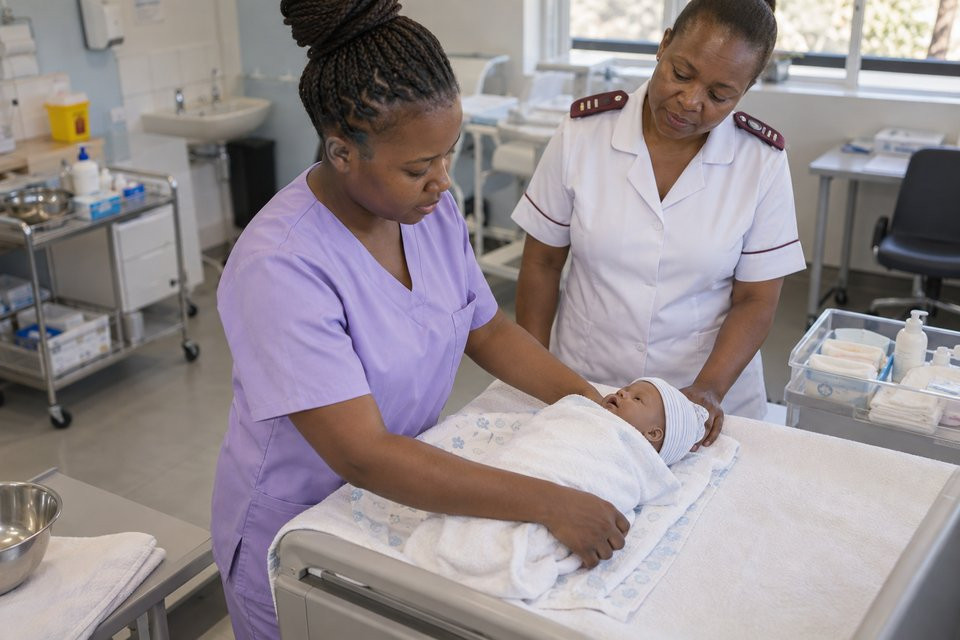
Develop midwifery knowledge within a formally approved post-basic nursing route. The proposed outline considers pregnancy, childbirth, the postnatal period and newborn care alongside respectful communication and family support. Southern African cases should connect scientific understanding with referral systems, community needs and the quality of maternity services.
What you'll learn
- Explain physiological and care concepts across the maternity period.
- Analyse a maternity or newborn case within a supervised role.
- Discuss referral, escalation and respectful communication responsibilities.
- Prepare a supervised practice reflection or maternity-quality investigation.
Requirements
- Entry requires a relevant National Certificate or A Level subjects in the field. English Language is required. A completed National Diploma may support second-year entry to a related degree only after BMIT approves module equivalence and any professional requirements.
- Programme-specific checks This provisional specialist outline assumes a recognised nursing qualification, current professional registration and relevant clinical experience. Exact entry and scope require Nurses Council of Zimbabwe or the applicable national regulator approval. BMIT must resolve whether the catalogue title describes post-basic training or another authorised route.
- African Kalanga is a compulsory graduation subject in every year of this programme. BMIT confirms the approved entry route, any recognition of prior learning and access to required practical facilities before enrolment.
Course content
Subjects in this programme
The subjects are grouped by learning stage, from foundations to specialist study and supervised application. Complete earlier foundations before the related advanced work. Clinical, laboratory, field and workplace subjects use approved facilities and supervision appropriate to the programme.
21 subjects are listed below, with a short description of each. The Subject descriptions tab contains the learning outcomes, topics, practical tasks and assessments.
Stage 1: Foundations
- Human Anatomy. Examine body organisation, musculoskeletal structures and their relationship within human anatomy. The subject develops thoracic structures and abdominal structures, then examines nervous structures and anatomical relationships. Study approved anatomical models and images in a supervised setting.
- Human Physiology. Develop your understanding of human physiology through homeostasis and cardiovascular function. The subject develops respiration and renal function, then examines endocrine regulation and nervous function. Interpret physiological teaching data and supervised non-invasive demonstrations.
- Microbiology. Study microbial diversity and cell function as foundations for microbiology. The subject develops growth concepts and microbial ecology, then examines quality controls and biosafety. Use approved images, datasets and low-risk supervised teaching materials.
- Fundamental Nursing. Examine nursing process, person-centred care and their relationship within fundamental nursing. The subject develops basic needs and observation, then examines documentation and infection prevention. Practise approved nursing skills in simulation under qualified supervision.
- Health Ethics and Professional Practice. Develop your understanding of health ethics and professional practice through consent and confidentiality. The subject develops scope of practice and equity, then examines professional accountability and ethical reasoning. Discuss a simulated ethical dilemma with attention to patient rights.
- Clinical Communication. Study listening and plain language as foundations for clinical communication. The subject develops cultural context and shared information, then examines team handover and documentation. Practise communication in supervised simulation using fictional cases.
Stage 2: Technical and applied subjects
- General Pathology. Examine cell injury, inflammation and their relationship within general pathology. The subject develops repair and neoplasia, then examines circulatory disturbances and disease mechanisms. Analyse de-identified teaching cases using approved pathology images.
- Pharmacology. Develop your understanding of pharmacology through drug action and pharmacokinetics. The subject develops therapeutic classes and adverse effects, then examines interactions and responsible medicine use. Analyse de-identified medicine teaching cases within authorised learner scope.
- Midwifery Foundations. Study reproductive science and maternity assessment concepts as foundations for midwifery foundations. The subject develops respectful care and maternal wellbeing, then examines newborn transition and professional responsibilities. Practise approved midwifery simulation and case discussion.
- Low-Risk Midwifery. Examine antenatal care, physiological labour and their relationship within low-risk midwifery. The subject develops postnatal care and newborn support, then examines family communication and documentation. Complete approved supervised low-risk maternity learning.
- Complex Midwifery and Referral. Develop your understanding of complex midwifery and referral through maternal complications and fetal concerns. The subject develops newborn concerns and deterioration, then examines team coordination and referral. Use approved simulation and supervised complex maternity case learning.
- Newborn Health and Nursing. Study adaptation and feeding as foundations for newborn health and nursing. The subject develops observation and common concerns, then examines family support and escalation. Practise approved newborn simulation and supervised learning.
- Community Health Nursing. Examine community assessment, primary care and their relationship within community health nursing. The subject develops prevention and home context, then examines family support and service coordination. Undertake authorised supervised community nursing learning.
- Clinical Skills Foundations. Develop your understanding of clinical skills foundations through patient interaction and structured assessment. The subject develops observation and documentation, then examines infection prevention and escalation. Practise approved skills in simulation before authorised clinical exposure.
Stage 3: Supervised practice and integration
- Clinical Reasoning and Evidence. Study problem representation and differential reasoning as foundations for clinical reasoning and evidence. The subject develops evidence appraisal and diagnostic uncertainty, then examines referral and reflective practice. Analyse de-identified cases within the approved professional learner role.
- Quality and Patient Safety. Examine care quality, patient experience and their relationship within quality and patient safety. The subject develops safety incidents and clinical governance, then examines improvement methods and measurement. Review a de-identified service-quality case using approved data.
- Research Methods. Develop your understanding of research methods through research questions and literature review. The subject develops study design and data collection, then examines ethics and interpretation. Prepare a feasible investigation proposal with a defined evidence need.
- Integrated Supervised Clinical Practice. Study approved clinical roles and care coordination as foundations for integrated supervised clinical practice. The subject develops case reasoning and observed competence, then examines professional feedback and reflection. Complete an approved placement with qualified clinical supervision and authenticated records.
- Project Development and Feasibility. Examine problem definition, evidence review and their relationship within project development and feasibility. The subject develops requirements and method selection, then examines feasibility and evaluation criteria. Develop an approved discipline-specific project proposal with a supervisor.
- Integrated Project and Technical Report. Develop your understanding of integrated project and technical report through implementation and evidence collection. The subject develops analysis and verification, then examines limitations and communication. Complete the approved project and maintain an auditable evidence record.
African History and Pan Africanism
- African History and Pan Africanism 101 (Level 1, compulsory core module): Study African history through oral, written and archaeological evidence. Examine the diversity of African societies, knowledge and exchange, then trace the emergence of Pan African ideas about identity, solidarity and self-determination.
Assessment and practical learning
- Proposed assessment: written case analyses, knowledge assessments and discussion of evidence and professional responsibilities.
- Observed simulation followed by assessed practice at an approved clinical site, with an authenticated competence portfolio.
- An applied service or evidence-review project. Clinical and final assessment requirements must be approved by the education provider and relevant regulator.
Practical application
Maternity and newborn learning requires approved facilities, qualified midwifery supervision and direct competence assessment. The learner must remain within the authorised professional role. Online study alone is insufficient. Any initial-entry alternative must be separately approved and must not be assumed from the National Diploma wording.
African History and Pan Africanism practical learning
- African History and Pan Africanism 101: Create an annotated timeline or digital learning poster on a selected African society or historical development. Compare at least two credible sources and explain one connection with your field of study.
Subject descriptions
Each subject below includes its purpose, learning outcomes, main topics, practical task and assessment approach.
Human Anatomy
Stage 1: Foundations
Examine body organisation, musculoskeletal structures and their relationship within human anatomy. The subject develops thoracic structures and abdominal structures, then examines nervous structures and anatomical relationships. Study approved anatomical models and images in a supervised setting.
Learning outcomes
- Explain body organisation and musculoskeletal structures using an appropriate example.
- Analyse a subject-related problem involving thoracic structures and abdominal structures.
- Present reasoned evidence addressing nervous structures and anatomical relationships.
Main topics
- Body organisation
- Musculoskeletal structures
- Thoracic structures
- Abdominal structures
- Nervous structures
- Anatomical relationships
Practical task
Study approved anatomical models and images in a supervised setting.
Assessment
Submit an annotated anatomy portfolio and identification assessment.
Human Physiology
Stage 1: Foundations
Develop your understanding of human physiology through homeostasis and cardiovascular function. The subject develops respiration and renal function, then examines endocrine regulation and nervous function. Interpret physiological teaching data and supervised non-invasive demonstrations.
Learning outcomes
- Explain homeostasis and cardiovascular function using an appropriate example.
- Analyse a subject-related problem involving respiration and renal function.
- Present reasoned evidence addressing endocrine regulation and nervous function.
Main topics
- Homeostasis
- Cardiovascular function
- Respiration
- Renal function
- Endocrine regulation
- Nervous function
Practical task
Interpret physiological teaching data and supervised non-invasive demonstrations.
Assessment
Submit a function-based case analysis and data interpretation.
Microbiology
Stage 1: Foundations
Study microbial diversity and cell function as foundations for microbiology. The subject develops growth concepts and microbial ecology, then examines quality controls and biosafety. Use approved images, datasets and low-risk supervised teaching materials.
Learning outcomes
- Explain microbial diversity and cell function using an appropriate example.
- Analyse a subject-related problem involving growth concepts and microbial ecology.
- Present reasoned evidence addressing quality controls and biosafety.
Main topics
- Microbial diversity
- Cell function
- Growth concepts
- Microbial ecology
- Quality controls
- Biosafety
Practical task
Use approved images, datasets and low-risk supervised teaching materials.
Assessment
Submit a microbiology portfolio explaining evidence and biosafety limits.
Fundamental Nursing
Stage 1: Foundations
Examine nursing process, person-centred care and their relationship within fundamental nursing. The subject develops basic needs and observation, then examines documentation and infection prevention. Practise approved nursing skills in simulation under qualified supervision.
Learning outcomes
- Explain nursing process and person-centred care using an appropriate example.
- Analyse a subject-related problem involving basic needs and observation.
- Present reasoned evidence addressing documentation and infection prevention.
Main topics
- Nursing process
- Person-centred care
- Basic needs
- Observation
- Documentation
- Infection prevention
Practical task
Practise approved nursing skills in simulation under qualified supervision.
Assessment
Complete observed skills assessments and a reflective portfolio.
Health Ethics and Professional Practice
Stage 1: Foundations
Develop your understanding of health ethics and professional practice through consent and confidentiality. The subject develops scope of practice and equity, then examines professional accountability and ethical reasoning. Discuss a simulated ethical dilemma with attention to patient rights.
Learning outcomes
- Explain consent and confidentiality using an appropriate example.
- Analyse a subject-related problem involving scope of practice and equity.
- Present reasoned evidence addressing professional accountability and ethical reasoning.
Main topics
- Consent
- Confidentiality
- Scope of practice
- Equity
- Professional accountability
- Ethical reasoning
Practical task
Discuss a simulated ethical dilemma with attention to patient rights.
Assessment
Submit a justified ethical decision and professional reflection.
Clinical Communication
Stage 1: Foundations
Study listening and plain language as foundations for clinical communication. The subject develops cultural context and shared information, then examines team handover and documentation. Practise communication in supervised simulation using fictional cases.
Learning outcomes
- Explain listening and plain language using an appropriate example.
- Analyse a subject-related problem involving cultural context and shared information.
- Present reasoned evidence addressing team handover and documentation.
Main topics
- Listening
- Plain language
- Cultural context
- Shared information
- Team handover
- Documentation
Practical task
Practise communication in supervised simulation using fictional cases.
Assessment
Complete an observed communication exercise and reflective record.
General Pathology
Stage 2: Technical and applied subjects
Examine cell injury, inflammation and their relationship within general pathology. The subject develops repair and neoplasia, then examines circulatory disturbances and disease mechanisms. Analyse de-identified teaching cases using approved pathology images.
Learning outcomes
- Explain cell injury and inflammation using an appropriate example.
- Analyse a subject-related problem involving repair and neoplasia.
- Present reasoned evidence addressing circulatory disturbances and disease mechanisms.
Main topics
- Cell injury
- Inflammation
- Repair
- Neoplasia
- Circulatory disturbances
- Disease mechanisms
Practical task
Analyse de-identified teaching cases using approved pathology images.
Assessment
Submit a mechanism-based pathology report.
Pharmacology
Stage 2: Technical and applied subjects
Develop your understanding of pharmacology through drug action and pharmacokinetics. The subject develops therapeutic classes and adverse effects, then examines interactions and responsible medicine use. Analyse de-identified medicine teaching cases within authorised learner scope.
Learning outcomes
- Explain drug action and pharmacokinetics using an appropriate example.
- Analyse a subject-related problem involving therapeutic classes and adverse effects.
- Present reasoned evidence addressing interactions and responsible medicine use.
Main topics
- Drug action
- Pharmacokinetics
- Therapeutic classes
- Adverse effects
- Interactions
- Responsible medicine use
Practical task
Analyse de-identified medicine teaching cases within authorised learner scope.
Assessment
Submit a pharmacological reasoning report and knowledge assessment.
Midwifery Foundations
Stage 2: Technical and applied subjects
Study reproductive science and maternity assessment concepts as foundations for midwifery foundations. The subject develops respectful care and maternal wellbeing, then examines newborn transition and professional responsibilities. Practise approved midwifery simulation and case discussion.
Learning outcomes
- Explain reproductive science and maternity assessment concepts using an appropriate example.
- Analyse a subject-related problem involving respectful care and maternal wellbeing.
- Present reasoned evidence addressing newborn transition and professional responsibilities.
Main topics
- Reproductive science
- Maternity assessment concepts
- Respectful care
- Maternal wellbeing
- Newborn transition
- Professional responsibilities
Practical task
Practise approved midwifery simulation and case discussion.
Assessment
Complete knowledge assessments and observed simulation records.
Low-Risk Midwifery
Stage 2: Technical and applied subjects
Examine antenatal care, physiological labour and their relationship within low-risk midwifery. The subject develops postnatal care and newborn support, then examines family communication and documentation. Complete approved supervised low-risk maternity learning.
Learning outcomes
- Explain antenatal care and physiological labour using an appropriate example.
- Analyse a subject-related problem involving postnatal care and newborn support.
- Present reasoned evidence addressing family communication and documentation.
Main topics
- Antenatal care
- Physiological labour
- Postnatal care
- Newborn support
- Family communication
- Documentation
Practical task
Complete approved supervised low-risk maternity learning.
Assessment
Submit an authenticated maternity competence portfolio.
Complex Midwifery and Referral
Stage 2: Technical and applied subjects
Develop your understanding of complex midwifery and referral through maternal complications and fetal concerns. The subject develops newborn concerns and deterioration, then examines team coordination and referral. Use approved simulation and supervised complex maternity case learning.
Learning outcomes
- Explain maternal complications and fetal concerns using an appropriate example.
- Analyse a subject-related problem involving newborn concerns and deterioration.
- Present reasoned evidence addressing team coordination and referral.
Main topics
- Maternal complications
- Fetal concerns
- Newborn concerns
- Deterioration
- Team coordination
- Referral
Practical task
Use approved simulation and supervised complex maternity case learning.
Assessment
Complete directly observed assessment and reasoned case reviews.
Newborn Health and Nursing
Stage 2: Technical and applied subjects
Study adaptation and feeding as foundations for newborn health and nursing. The subject develops observation and common concerns, then examines family support and escalation. Practise approved newborn simulation and supervised learning.
Learning outcomes
- Explain adaptation and feeding using an appropriate example.
- Analyse a subject-related problem involving observation and common concerns.
- Present reasoned evidence addressing family support and escalation.
Main topics
- Adaptation
- Feeding
- Observation
- Common concerns
- Family support
- Escalation
Practical task
Practise approved newborn simulation and supervised learning.
Assessment
Submit an authenticated newborn-care learning portfolio.
Community Health Nursing
Stage 2: Technical and applied subjects
Examine community assessment, primary care and their relationship within community health nursing. The subject develops prevention and home context, then examines family support and service coordination. Undertake authorised supervised community nursing learning.
Learning outcomes
- Explain community assessment and primary care using an appropriate example.
- Analyse a subject-related problem involving prevention and home context.
- Present reasoned evidence addressing family support and service coordination.
Main topics
- Community assessment
- Primary care
- Prevention
- Home context
- Family support
- Service coordination
Practical task
Undertake authorised supervised community nursing learning.
Assessment
Submit a community case study and authenticated practice record.
Clinical Skills Foundations
Stage 2: Technical and applied subjects
Develop your understanding of clinical skills foundations through patient interaction and structured assessment. The subject develops observation and documentation, then examines infection prevention and escalation. Practise approved skills in simulation before authorised clinical exposure.
Learning outcomes
- Explain patient interaction and structured assessment using an appropriate example.
- Analyse a subject-related problem involving observation and documentation.
- Present reasoned evidence addressing infection prevention and escalation.
Main topics
- Patient interaction
- Structured assessment
- Observation
- Documentation
- Infection prevention
- Escalation
Practical task
Practise approved skills in simulation before authorised clinical exposure.
Assessment
Complete observed assessments and a supervisor-authenticated skills portfolio.
Clinical Reasoning and Evidence
Stage 3: Supervised practice and integration
Study problem representation and differential reasoning as foundations for clinical reasoning and evidence. The subject develops evidence appraisal and diagnostic uncertainty, then examines referral and reflective practice. Analyse de-identified cases within the approved professional learner role.
Learning outcomes
- Explain problem representation and differential reasoning using an appropriate example.
- Analyse a subject-related problem involving evidence appraisal and diagnostic uncertainty.
- Present reasoned evidence addressing referral and reflective practice.
Main topics
- Problem representation
- Differential reasoning
- Evidence appraisal
- Diagnostic uncertainty
- Referral
- Reflective practice
Practical task
Analyse de-identified cases within the approved professional learner role.
Assessment
Submit case analyses and an oral reasoning assessment.
Quality and Patient Safety
Stage 3: Supervised practice and integration
Examine care quality, patient experience and their relationship within quality and patient safety. The subject develops safety incidents and clinical governance, then examines improvement methods and measurement. Review a de-identified service-quality case using approved data.
Learning outcomes
- Explain care quality and patient experience using an appropriate example.
- Analyse a subject-related problem involving safety incidents and clinical governance.
- Present reasoned evidence addressing improvement methods and measurement.
Main topics
- Care quality
- Patient experience
- Safety incidents
- Clinical governance
- Improvement methods
- Measurement
Practical task
Review a de-identified service-quality case using approved data.
Assessment
Submit a measurable quality-improvement proposal.
Research Methods
Stage 3: Supervised practice and integration
Develop your understanding of research methods through research questions and literature review. The subject develops study design and data collection, then examines ethics and interpretation. Prepare a feasible investigation proposal with a defined evidence need.
Learning outcomes
- Explain research questions and literature review using an appropriate example.
- Analyse a subject-related problem involving study design and data collection.
- Present reasoned evidence addressing ethics and interpretation.
Main topics
- Research questions
- Literature review
- Study design
- Data collection
- Ethics
- Interpretation
Practical task
Prepare a feasible investigation proposal with a defined evidence need.
Assessment
Submit a proposal, methods rationale and ethics considerations.
Integrated Supervised Clinical Practice
Stage 3: Supervised practice and integration
Study approved clinical roles and care coordination as foundations for integrated supervised clinical practice. The subject develops case reasoning and observed competence, then examines professional feedback and reflection. Complete an approved placement with qualified clinical supervision and authenticated records.
Learning outcomes
- Explain approved clinical roles and care coordination using an appropriate example.
- Analyse a subject-related problem involving case reasoning and observed competence.
- Present reasoned evidence addressing professional feedback and reflection.
Main topics
- Approved clinical roles
- Care coordination
- Case reasoning
- Observed competence
- Professional feedback
- Reflection
Practical task
Complete an approved placement with qualified clinical supervision and authenticated records.
Assessment
Pass direct clinical assessments and submit a reflective competence portfolio.
Project Development and Feasibility
Stage 3: Supervised practice and integration
Examine problem definition, evidence review and their relationship within project development and feasibility. The subject develops requirements and method selection, then examines feasibility and evaluation criteria. Develop an approved discipline-specific project proposal with a supervisor.
Learning outcomes
- Explain problem definition and evidence review using an appropriate example.
- Analyse a subject-related problem involving requirements and method selection.
- Present reasoned evidence addressing feasibility and evaluation criteria.
Main topics
- Problem definition
- Evidence review
- Requirements
- Method selection
- Feasibility
- Evaluation criteria
Practical task
Develop an approved discipline-specific project proposal with a supervisor.
Assessment
Submit a proposal, evidence review and evaluation plan.
Integrated Project and Technical Report
Stage 3: Supervised practice and integration
Develop your understanding of integrated project and technical report through implementation and evidence collection. The subject develops analysis and verification, then examines limitations and communication. Complete the approved project and maintain an auditable evidence record.
Learning outcomes
- Explain implementation and evidence collection using an appropriate example.
- Analyse a subject-related problem involving analysis and verification.
- Present reasoned evidence addressing limitations and communication.
Main topics
- Implementation
- Evidence collection
- Analysis
- Verification
- Limitations
- Communication
Practical task
Complete the approved project and maintain an auditable evidence record.
Assessment
Submit the final project, report and individual oral defence.
African History and Pan Africanism 101
Compulsory core module · Level 1
Study African history through oral, written and archaeological evidence. Examine the diversity of African societies, knowledge and exchange, then trace the emergence of Pan African ideas about identity, solidarity and self-determination.
Learning outcomes
- Place selected African societies and events within a supported historical timeline.
- Compare historical sources and identify perspective, evidence and uncertainty.
- Explain the foundations of Pan Africanism and the contributions of Africans and the diaspora.
Main topics
- Historical inquiry, chronology, oral traditions and source evaluation
- African civilisations, states, trade, livelihoods and knowledge systems
- Southern African history, including Mapungubgwe and Great Zimbabwe
- Slavery, the African diaspora and changing ideas about identity
- Origins of Pan Africanism, solidarity, self-determination and cultural expression
Practical task
Create an annotated timeline or digital learning poster on a selected African society or historical development. Compare at least two credible sources and explain one connection with your field of study.
Assessment
Submit the timeline or poster, an annotated source list and a short explanation of the evidence. Assessment considers chronology, historical accuracy, source judgement and the clarity of your interpretation.
Learning resources
Instructors
Enrolment options
National Diploma in Nursing (Midwifery Nursing)
Develop midwifery knowledge within a formally approved post-basic nursing route. The proposed outline considers pregnancy, childbirth, the postnatal period and newborn care alongside respectful communication and family support. Southern African cases should connect scientific understanding with referral systems, community needs and the quality of maternity services.
- Teacher: ImfundoSpace Administrator
- Enrolled students: There are no students enrolled in this course.


